At Pin Hive, we create original pins and accessories made for people who just really like pins. Check out our cute creatures, cozy vibes, eco themed designs, and mystery picks.
Environmental Effects of Enamel Pins
Enamel pins may look small and harmless, but the reality is that traditional pin manufacturing can have a sizable environmental impact. As pin collectors, traders, and designers, it's important to understand the full picture of what goes into producing these mini art pieces.
🌍 What Goes Into a Single Pin?
- Metals like iron, zinc alloy, or brass must be mined, refined, and processed.
- Energy intensive manufacturing processes like die stamping, baking, and electroplating use fuel and electricity.
- Electroplating and enameling involve chemicals that, if not handled properly, can contaminate water and soil.
- Most pins are shipped internationally, contributing to carbon emissions from air and sea freight.
- Plastic packaging from pin sleeves to bubble mailers, often end up in landfills.
🧪 Chemical Waste and Pollution
Some traditional pin factories don’t have adequate safeguards, leading to chemical runoff from plating baths, which use nickel, copper, and acids. These chemicals can harm local ecosystems if wastewater isn’t treated properly. Additionally, pins that don’t pass quality checks are often discarded, contributing to metal waste and pollution.
🚫 Overproduction and Fast Fashion Vibes
Like fast fashion, the pin industry has sometimes fallen into a “mass-produce-now, sell later” pattern. Some factories offer steep discounts for large MOQs (minimum order quantities), encouraging overproduction. Leftover inventory becomes deadstock, or worse, landfill. Limited edition pins can also create pressure to buy fast, encouraging impulse purchasing over intentional collecting.
🏰Are Disney Pins Eco Friendly?
While Disney pins are beautiful and collectible, their production methods aren’t typically advertised as eco-conscious. Most are mass produced overseas, often using traditional materials and packaging. That doesn’t mean you shouldn’t collect them, just be mindful! Trade, reuse, and store them in a way that gives them long lasting life.
🐝Are Pin Hive Pins Eco Friendly?
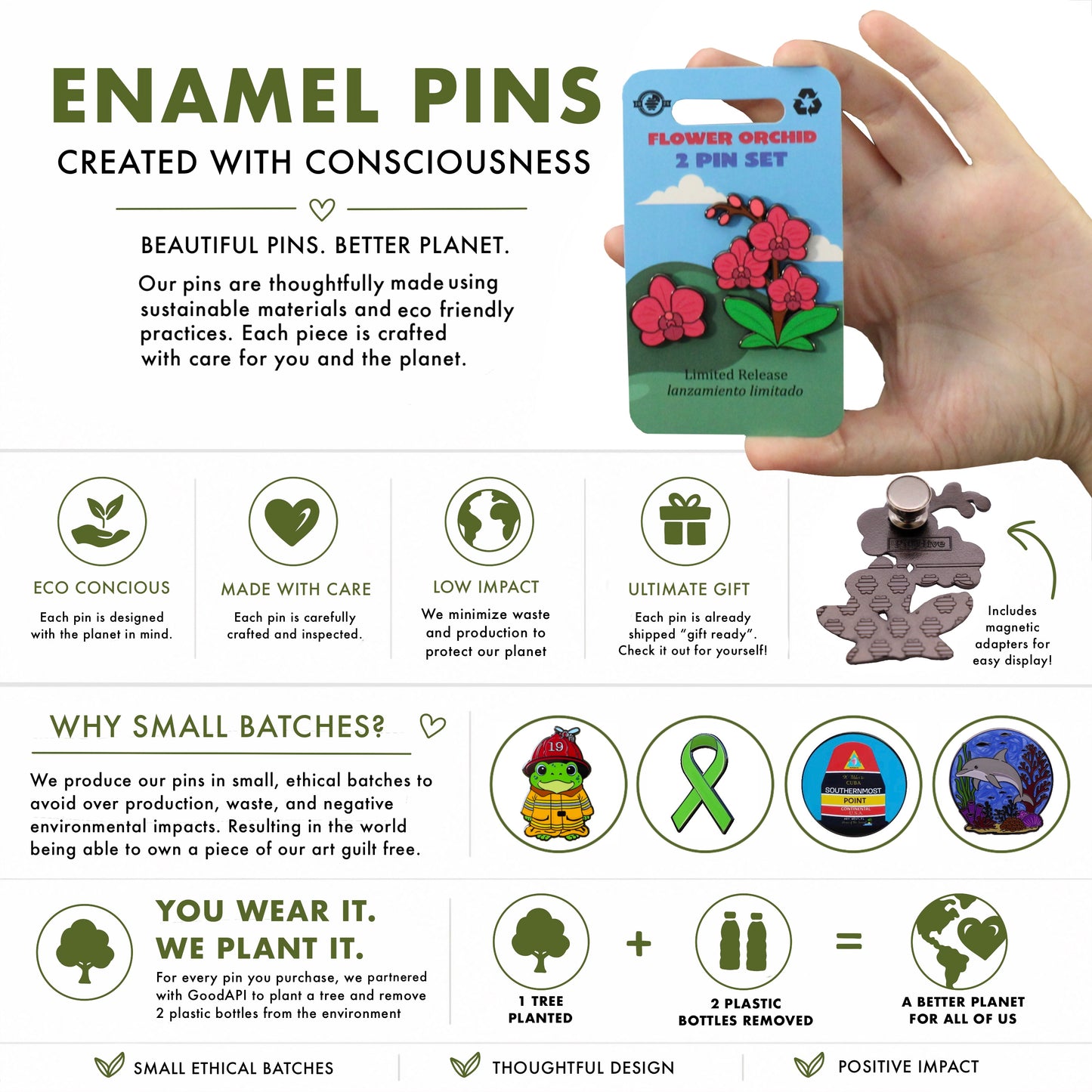
Yes, and proudly so! At Pin Hive, we take sustainability seriously. We:
- Use recycled and recyclable metals for our pins
- Partner with eco conscious factories that match our values
- Package all pins in recycled compostable sleeves and recycled card stock or hemp based backings
- Plant a tree and remove ocean plastic with every single pin
We’re always looking for ways to do better, because we care about the planet as much as we care about pins. If you have suggestions or requests feel free to reach out through our chat function 💬
♻️What should I do with damaged or flawed pins?
Don’t toss them! Damaged pins can be transformed into all sorts of cool creations:
- 🧲 Magnets (just glue a magnet to the back!)
- 💍 Jewelry like rings, pendants, or earrings
- 📎 Decorative clips or tacks for cork boards
- 🖼 Framed pin collages or shadowboxes
- 🎁 Crafty gifts for friends
If you’re not the crafty type, consider donating your damaged pins to artists or DIYers who upcycle pin scraps into art. Give your pin a second life!
🌱How can you contribute to collecting more greenly?
Collecting pins can be fun and responsible! Here are a few simple ways to make your pin hobby more eco friendly:
- Buy from creators who prioritize sustainability, like Pin Hive
- Trade, gift, or resell pins you no longer want, it keeps them out of landfills
- Request eco packaging when buying from smaller shops
- Recycle or repurpose pin mailers, backer cards, and sleeves when possible
- Support pin sellers who plant trees, offset emissions, or use recycled materials
Now is the time to grow your collection and make a real impact. Every pin you purchase plants a tree and helps restore forests across the globe. Head to our shop today, and with each pin you buy, you’re not just collecting, you’re making the world a little greener